Evidence Based Care
The Neurosequential Model of Therapeutics™ (NMT™ ) is a neuroscience-informed, developmentally sensitive approach to clinical problem solving.
It is not a therapy, and it does not endorse a single therapeutic method or technique. Rather, it helps the clinical team select and sequence specific therapeutic, educational and enrichment activities which are most likely to help address the client’s current challenges.
How It Works
The NMT™ assessment process looks at both past history and current functioning. The nature and timing of negative and positive developmental experiences is reviewed. By using this ‘developmental’ lens, in combination with an evaluation of current strengths and challenges, the clinical team is able to create a personalized treatment approach for the individual.


How It Helps
The NMT™ Clinical Practice Tools (AKA NMT™ Brain Map or NMT™ Metrics) help create a snapshot into the current functional organization of an individual’s ‘brain.’ This working model helps guide clinical treatment planning and allows ongoing re-evaluation of the treatment process. As the client changes, their needs will change. The NMT™ metric ensures the utilization of the most effective interventions, timed specifically for the client’s current developmental capabilities and needs, thereby optimizing the probability of success.
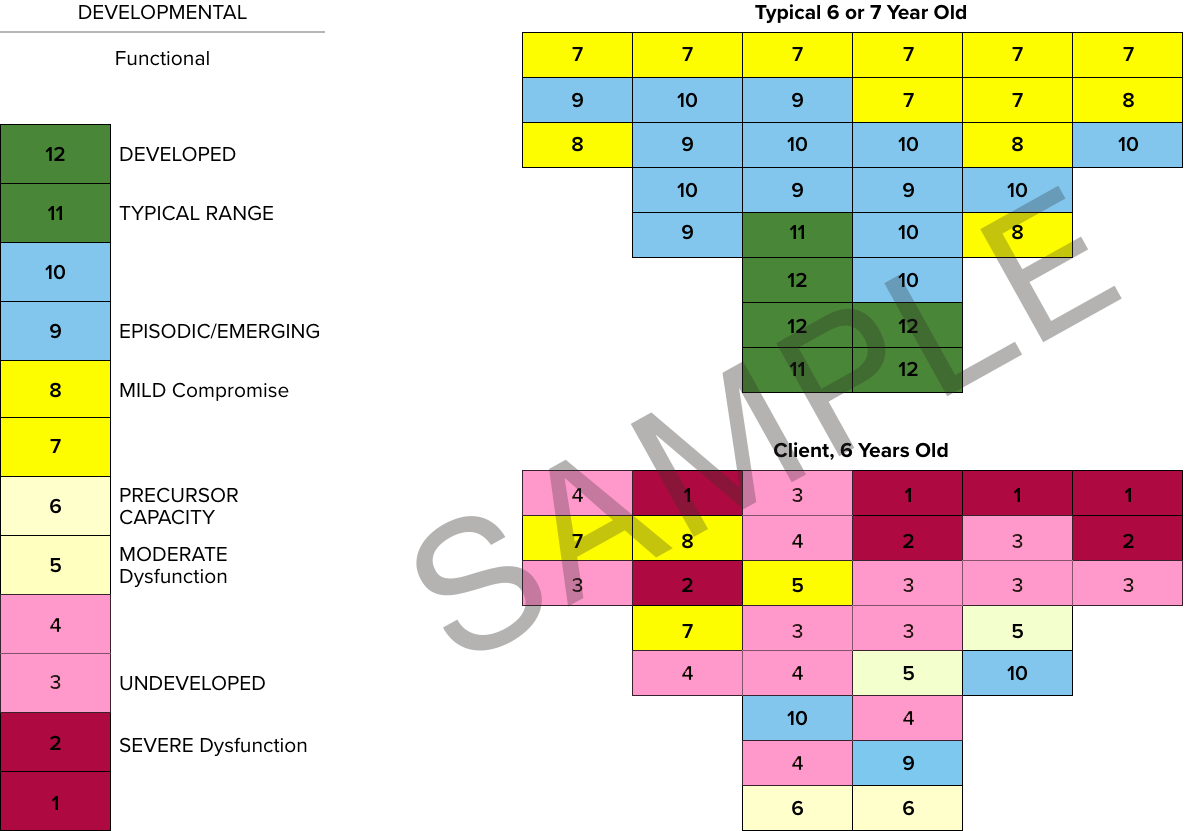
This image demonstrates the NMT™ model in use.
For more information on Dr. Bruce Perry and the Neurosequential Model please visit this website.
Training
Prairie Tides offers two Neurobiology of Trauma trainings.
Level I introduces how childhood adversity and attachment disruptions shape brain development, stress responses, and behaviour. Participants will gain an understanding of the importance of safety and emotional regulation, particularly for individuals who have experienced adverse childhood experiences (ACEs), mental health challenges, or co-occurring disorders.
Level II builds on these foundations, exploring more advanced concepts, chronic stress, and complex trauma. Using case examples and real-world applications, participants develop skills to assess regulation needs, tailor interventions, and create healing environments. Both trainings equip professionals and caregivers to promote resilience, understanding, and well-being in those impacted by early adversity.